
How Much Cash Do First-Time Buyers Need in Grants Pass? A Local Broker’s Honest Breakdown
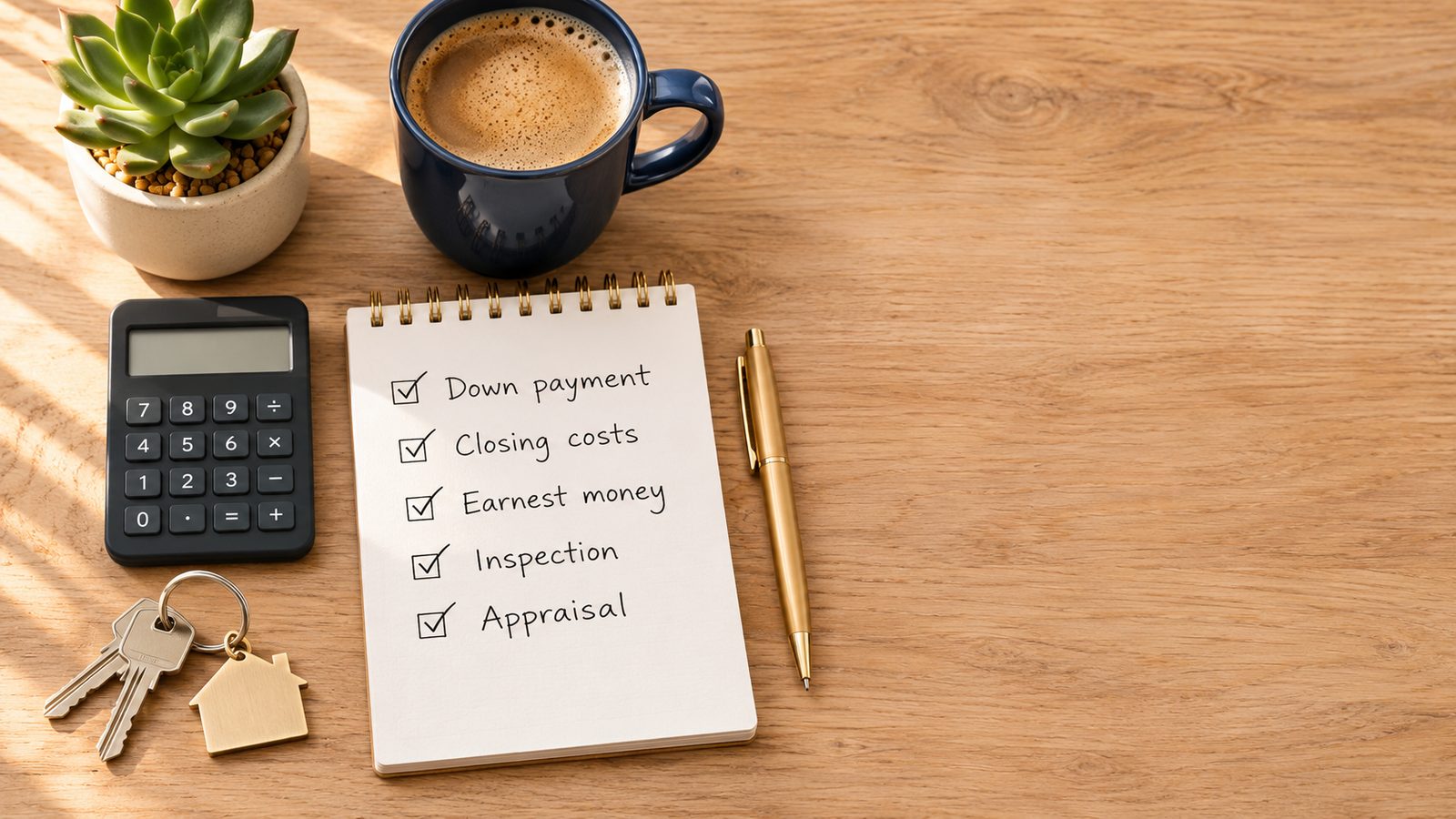
First-time buyers in Grants Pass should plan for five buckets of cash: the down payment (from 0% with VA or USDA loans, about 3–3.5% with many conventional and FHA loans), buyer closing costs and prepaid items, earnest money (typically about 1% of the price, though $1,000 is often accepted on homes up to about $500,000), inspections and appraisal (around $500 for a standard home inspection, more for well and septic, and about $800 for the appraisal), and a cushion for moving and the first few months. Seller concessions and Oregon down payment assistance programs can shrink that total. The most accurate number comes from a lender’s Loan Estimate on a real price, so get pre-approved before you start shopping.
“How much do I actually need to have saved?”
It’s the first question almost every first-time buyer asks me, and it’s a smart one. Most people have heard about the down payment. Far fewer know about the other checks they’ll write along the way, and some of those come due weeks before closing.
So here is the full picture for buying in Grants Pass and the rest of Josephine County, bucket by bucket. One note first: I’m a broker, not a lender, so any rate, payment, or loan-specific figure should come from your mortgage professional. Think of this as the map, and your lender’s Loan Estimate as the turn-by-turn directions.
How much is the down payment for a first-time buyer in Grants Pass?
It depends mostly on your loan type, and it’s often less than people think. Here are the common starting points:
- Conventional loans: some programs allow as little as 3% down for qualified first-time buyers. Putting less than 20% down usually means mortgage insurance.
- FHA loans: typically 3.5% down for borrowers who meet the credit requirements.
- VA loans: often 0% down for eligible veterans and service members.
- USDA loans: 0% down in eligible rural areas. Whether a given address qualifies depends on USDA’s eligibility map, so check before you count on it.
To make it concrete, here’s a hypothetical: on a $400,000 home, 3% down is $12,000 and 3.5% down is $14,000. That’s simple math, not a local price estimate. Your lender will run the real numbers for your situation.
What closing costs do buyers pay in Oregon?
Beyond the down payment, buyers usually pay lender fees and some title and escrow costs, plus “prepaid” items that get your loan and homeowner’s insurance set up. The typical categories include:
- Lender charges: origination or underwriting fees, credit report, and any points you choose to buy.
- Appraisal: about $800 locally. It’s often paid upfront, before closing, so plan for it early.
- Title and escrow: in Oregon, the seller customarily pays for the owner’s title insurance policy and escrow fees are usually split between buyer and seller. The buyer typically pays for the lender’s title policy and the fee to record the trust deed.
- Prepaids and reserves: your first year of homeowner’s insurance, prepaid mortgage interest, and an initial deposit into your escrow account for future property taxes and insurance.
There’s good news here too. Oregon has no real estate transfer tax outside Washington County, so buyers in Josephine and Jackson County don’t face that cost.
Two local wrinkles affect the prepaid line. First, homeowner’s insurance in wildfire-exposed parts of Southern Oregon can cost more and take longer to secure, so get quotes early. Second, Oregon property taxes are billed in the fall, so depending on your closing date, escrow may need to collect more for taxes upfront.
How much does all of this add up to? It varies too much by loan, price, and closing date for one number to be reliable, so think of this post as your checklist. Get every piece lined up, and your lender’s Loan Estimate will put an exact figure on each line.
How much earnest money do you need in Grants Pass?
Earnest money is the good-faith deposit you put down after your offer is accepted. It’s held by escrow and credited toward your costs at closing, so it isn’t an extra expense, but you need the cash available within days of an accepted offer.
In our area, the general rule of thumb is about 1% of the purchase price. On lower-priced homes, though, 1% can be more than a first-time buyer needs to tie up. In my experience, $1,000 is the usual minimum, and it’s generally acceptable on homes up to about $500,000. Above $500,000, sellers typically like to see closer to 1%.
Here’s a hypothetical: on a $350,000 home, 1% would be $3,500, but an offer with $1,000 down is often acceptable at that price. On a $600,000 home, expect sellers to look for around $6,000. Every seller and situation is different, so we’ll talk through what makes your offer competitive.
Your contract and contingencies spell out when that deposit is refundable, so read that section closely.
How much do home inspections cost in Grants Pass?
These are the costs that catch first-time buyers off guard, because you pay them during escrow whether or not the deal closes. Here’s what I typically see locally:
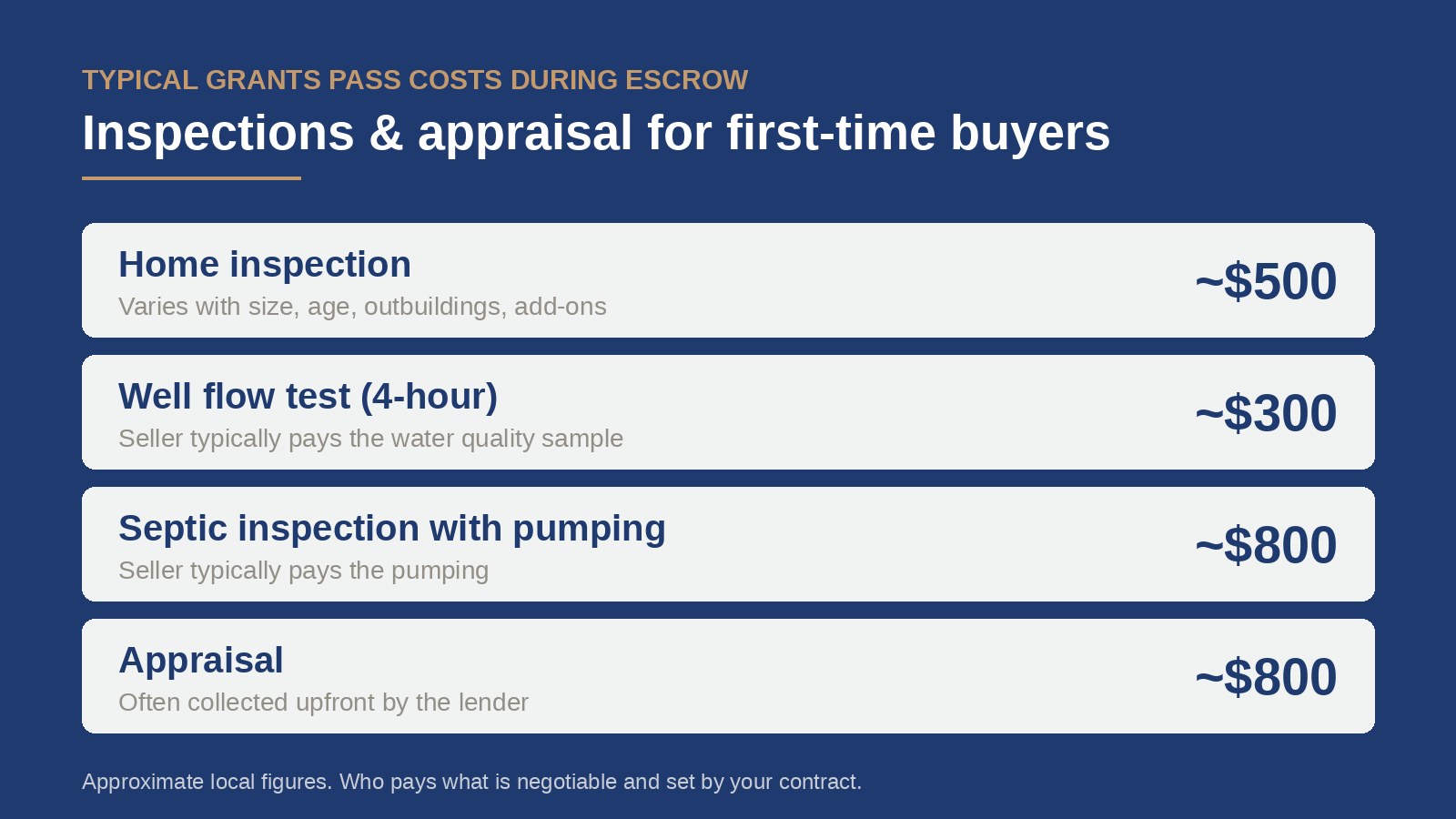
- Home inspection: about $500. That number moves with the size and age of the house, and it goes up if you want outbuildings inspected or add other services. Every buyer should get one.
- Septic inspection: about $800 with pumping. The tank has to be pumped so the inspector can see inside it, and sellers typically pay for the pumping. That means the buyer’s share is usually less than the full amount.
- Well inspection: about $300 for a 4-hour flow test. Sellers typically pay for the water quality (purity) sample.
- Other specialty inspections: depending on the home, you may also want a sewer-line scope, a roof inspection, or a pest inspection. Costs vary, so ask for quotes when you schedule.
- Appraisal: about $800, if your lender collects it upfront.
So for a hypothetical in-town home on city water and sewer, you might plan on roughly $500 for the inspection, plus about $800 for the appraisal if your lender collects it upfront. For a rural home on a well and septic, the total could easily be a few hundred dollars more once you add the flow test and your share of the septic inspection. Who pays for what is negotiable and written into the contract, so confirm it before you sign.
How much should you keep in reserve after closing?
Don’t empty your accounts to get to the closing table. Some loan programs require reserves, and even when they don’t, you’ll want money for moving, utility deposits, basic furniture, and the surprise repair that shows up in the first few months. A lot of first-time buyers I work with are glad they kept a cushion.
How can first-time buyers in Grants Pass need less cash?
There are a few common ways to bring the number down:
- Seller concessions: in many deals, the buyer can ask the seller to contribute toward closing costs, within the limits your loan program allows.
- Down payment assistance: Oregon and local programs can help eligible buyers with the down payment or closing costs.
- Lender credits: some lenders offer a credit toward closing costs in exchange for a slightly different rate. That’s a conversation to have with your lender.
- Gift funds: many loan programs allow gifts from family, with proper documentation.
My advice: get the real number before you shop
Start with a pre-approval from a lender who knows Southern Oregon, ask for a sample Loan Estimate at the price range you’re considering, and build your savings plan around that. On the Bifano Home Team, we’ll walk you through each of these buckets before you write an offer, so the closing table brings no surprises.
If you’re a first-time buyer trying to figure out whether you’re closer than you think, I’m happy to help you map it out. No pressure, no obligation, just a clear plan.
Insurance is one of the prepaid items on your closing costs. Here’s how buyers in wildfire-exposed areas get coverage lined up early.
Buying a Home on a Well in Josephine County? Ask These Questions Before You Write the OfferLooking at rural homes? What to ask about the well before the flow test is ever scheduled.
Frequently asked questions
How much money do I need to buy a house in Grants Pass?
How much earnest money is typical in Grants Pass?
How much does a home inspection cost in Grants Pass?
Can I buy a home in Grants Pass with no money down?
Is there a transfer tax when buying a home in Josephine County?
Sources
- Stewart Title, Oregon Real Estate Practices (owner’s title policy customarily paid by the seller; escrow fee split; transfer tax only in Washington County)
- Earnest money, inspection, and appraisal figures are approximate, from Daniel Bifano’s local experience.
This post is general information, not lending, legal, or tax advice. Dollar examples are hypothetical math, not price estimates. Loan programs, fees, and local customs change, so confirm the numbers for your situation with your lender and your Loan Estimate.