
Does Defensible Space Actually Lower Your Insurance in Southern Oregon?
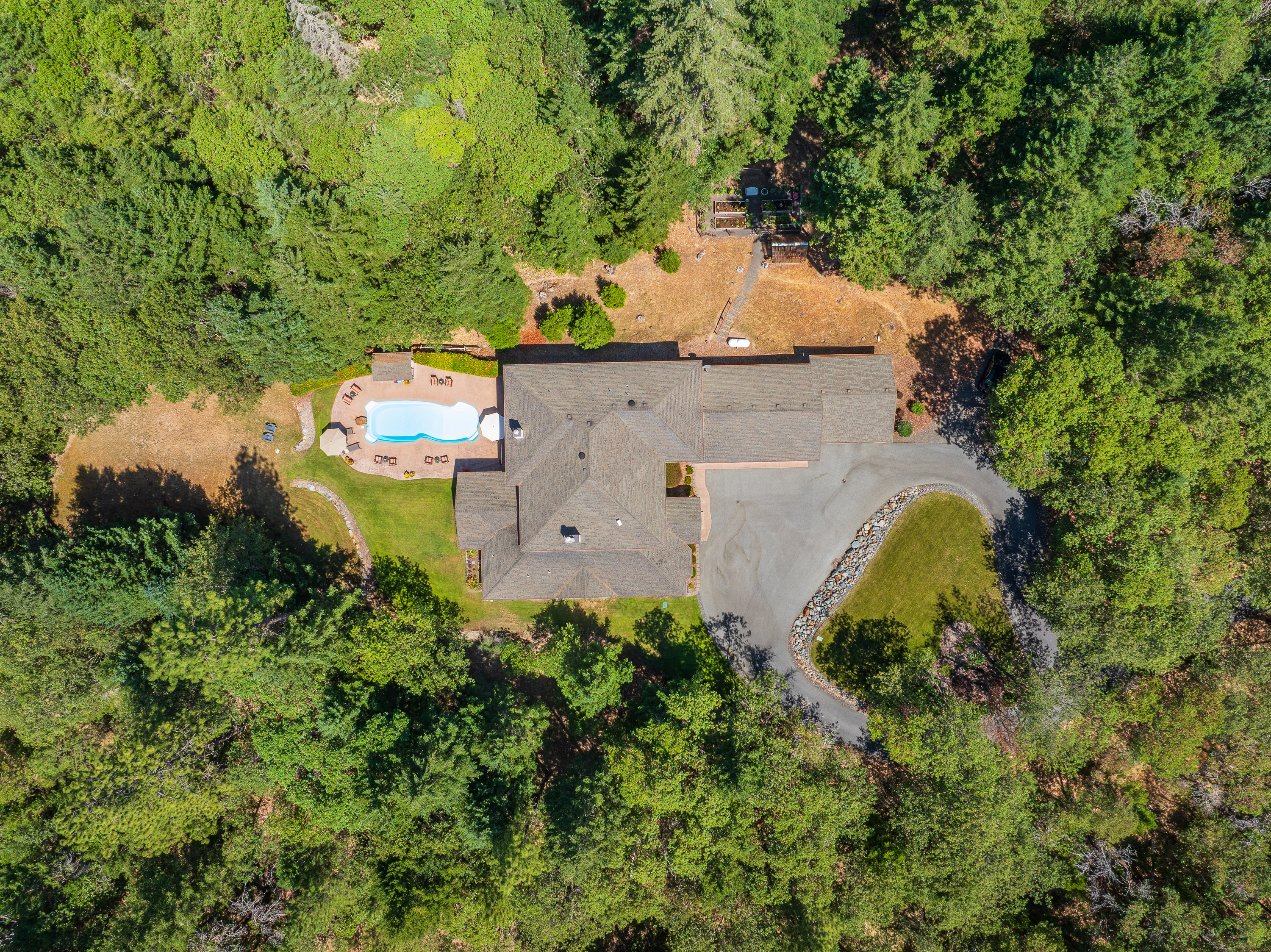
Defensible space and home hardening can help you keep — and sometimes lower — your homeowners insurance in Southern Oregon, but not because clearing brush automatically triggers a discount. Insurers care about specific, verifiable steps: a five-foot noncombustible zone around the house, a Class A roof, and ember-resistant vents. The single most effective place to start is the first five feet around your home.
If you own a home anywhere in Josephine or Jackson County, you've probably had the conversation — with a neighbor, at the hardware store, maybe with your own agent at renewal time. Insurance in the Rogue Valley has gotten harder to keep and more expensive to hold. And somewhere in that conversation, someone always says: “Well, if you clear your defensible space, they'll give you a discount.”
I hear that constantly, and I understand why people believe it. It's mostly true — but the way it's usually said sets people up for disappointment. Raking pine needles and pulling a few blackberry vines feels like it should earn you something. Often it doesn't, at least not directly. What actually moves an underwriter is narrower and more specific than most homeowners expect. So let's clear that up, because doing the right work in the right order genuinely matters here.
Does defensible space actually lower your insurance?
Sometimes, yes — but “defensible space” alone is not a magic discount code. Here's the honest version: in Oregon today, most insurers aren't obligated to give you a line-item credit just because your lot is clear. What they are doing is deciding whether to keep writing your policy at all, and at what price. Statewide reporting has put Oregon home-insurance premiums up more than 27% since 2020 (Consumer Federation of America, cited in 2026 coverage of the legislature's insurance debate). In high-risk areas of Southern Oregon, mitigation work often shows up less as a visible discount and more as the difference between staying insurable on the standard market versus getting non-renewed and pushed toward far pricier coverage.
There was real movement on this in Salem. In early 2026, State Senator Jeff Golden of Ashland introduced Senate Bill 1540, modeled on a Colorado law, which would have required insurers to account for property-level wildfire mitigation — and to offer a discount or other incentive when a homeowner proves they've done the work. It cleared the Senate Committee on Natural Resources and Wildfire unanimously, but it stalled in the Senate Rules Committee after industry pushback and did not become law. I mention it because it tells you where the ground is shifting, not because the credit is guaranteed today. Rules and market conditions change, so this is one to watch.
What kind of work actually counts?
The most credible standard right now comes from the Insurance Institute for Business and Home Safety (IBHS), an independent nonprofit backed by major insurers. Their Wildfire Prepared Home program is essentially the checklist the industry itself trusts, and it's what SB 1540 would have pointed to. It rewards specific, inspectable features rather than general tidiness.
Three things sit at the top of that list:
The 0–5 foot noncombustible zone. IBHS calls the first five feet around your home the single most important area. The goal is simple: nothing that can catch an ember and carry flame right up to the wall. That means no bark mulch, no firewood stacked against the siding, no propane tank or trash bin in that band, no dense shrubs under the windows — and it includes the footprint of an attached deck. Embers are the leading cause of home ignitions, and they don't need a wall of flame to find you; they blow in ahead of the fire and land in exactly these spots.
A Class A roof. Your roof is the biggest surface a drifting ember can land on. Class A roofing — most asphalt composition shingle, metal, and tile — gives the best fire resistance. If you're already facing a roof replacement, doing it in a Class A material is one of the highest-value moves you can make.
Ember-resistant vents. Attic and crawlspace vents are how embers get inside a house, which is how a lot of homes are actually lost. Upgrading to vents designed to block embers is inexpensive relative to what it protects.
Beyond those, the program looks at maintaining roughly 30 feet of defensible space, keeping gutters clear, and hardening other vulnerable features. Designation is awarded only after a trained, credentialed evaluator confirms the work on site, and it's good for three years before reinspection. That third-party verification is the part insurers respect — it's not you saying you did the work, it's an inspector confirming it.
The do-this-first checklist for Rogue Valley homeowners
If you do nothing else this season, work from the house outward. In order:
- Clear the first five feet. Pull combustible mulch, move the firewood pile, relocate the propane tank and garbage cans, and cut back shrubs touching the siding. This is free or nearly free and it's the highest-impact step you can take.
- Clean your roof and gutters. Pine needles and leaf litter in the gutters and roof valleys are perfect ember catchers. In our valley, with the fir and oak we've got, this is a recurring chore, not a one-time fix.
- Screen your vents. Look into ember-resistant vent covers for attic and crawlspace openings.
- Plan the bigger items. When a roof, deck, or fence is due for replacement, choose the fire-resistant material and detail the connection where a wood fence meets the house.
- Document everything. Photograph the work, keep receipts, and ask your agent exactly what their carrier will credit. If you're near a Class A designation, the paper trail is what makes it count.
Here's when to call a specialist
I'm a Licensed Principal Broker, not your insurance agent — and that distinction matters here. Whether a specific carrier will lower your premium for your work is a question only your licensed insurance agent can answer, because it depends on the carrier, your rating area, and your property's risk score. For the mitigation work itself, Josephine and Jackson County both have local resources worth using: your local fire district and the Oregon Department of Forestry can point you toward defensible-space guidance and, in some seasons, assistance programs. OSU Extension has practical firewise landscaping information written for our climate. And if you're weighing a bigger project, a contractor familiar with home-hardening standards will save you from spending money on the wrong things.
The takeaway
Defensible space is real, and it's worth doing — just do it for the right reasons and in the right order. The near-term payoff in Southern Oregon is often staying insurable rather than a headline discount, and the state is clearly moving toward rewarding mitigation more directly. Either way, the first five feet around your home is the best hour of work you'll do all year. Start there.
If you're buying or selling in the Rogue Valley and wondering how a property's wildfire risk and insurability might affect your plans, that's a conversation I'm always glad to have — no pressure, just a straight answer.
If you've been non-renewed or a lender flagged a hard-to-insure home, here's the sequence that usually works.
Frequently asked questions
Does clearing brush automatically lower my homeowners insurance in Oregon?
What is the 5-foot noncombustible zone?
Is defensible space required by law in Oregon?
Did Oregon pass a law making insurers give discounts for wildfire mitigation?
What's the highest-value first step?
Sources
- Insurance Institute for Business and Home Safety (IBHS), Wildfire Prepared Home standard — Zone 0 requirements, Class A roofing, ember-resistant vents, third-party evaluation and three-year designation.
- Oregon Senate Bill 1540 (2026), introduced by Sen. Jeff Golden — passed the Senate Committee on Natural Resources and Wildfire unanimously; stalled in Senate Rules and did not become law.
- Consumer Federation of America — Oregon homeowners-insurance premium increase of more than 27% since 2020, as cited in 2026 legislative coverage.
- Oregon Department of Forestry and OSU Extension Service — defensible-space and firewise landscaping guidance for Southern Oregon.
This article is general information, not insurance advice. Program details, statutes, and carrier practices change — confirm current requirements with your licensed insurance agent, your local fire district, or the Oregon Department of Forestry before acting.