
Why the Zestimate on Your Grants Pass Home Is Probably Wrong
A Zestimate is a computer-generated guess, and in a market like Grants Pass it's often off by a wide margin. Zillow's model leans on public records and past sales, so it struggles with the things that actually drive value here — acreage, river or creek frontage, well and septic condition, updates it can't see, and how thin the pool of truly comparable sales is. Treat the number as a rough starting point, not a price. A local comparative market analysis is what tells you what your home is really worth.
Why does my Grants Pass Zestimate keep changing — and why is it probably wrong?
If you've ever watched the Zestimate on your Grants Pass home bounce a few thousand dollars in a week and wondered what changed about your house, the honest answer is: nothing did. The number moved because the algorithm did.
A Zestimate is an automated valuation model — software that ingests public records and recent sales and produces an estimate. Zillow is upfront that it's a starting point, not an appraisal, and the company publishes its own accuracy data to make the point. The gap in that data is the part worth knowing: for homes actively listed for sale, the nationwide median error runs around 2%. For off-market homes — which is what you're looking at if your house isn't currently listed — it's roughly 7%.
Two things follow from that. First, the number most homeowners check is the less accurate version of it. Second, "median error" means half of all estimates are off by more than that. On a $500,000 home, 7% is $35,000 — and half the time the miss is bigger.
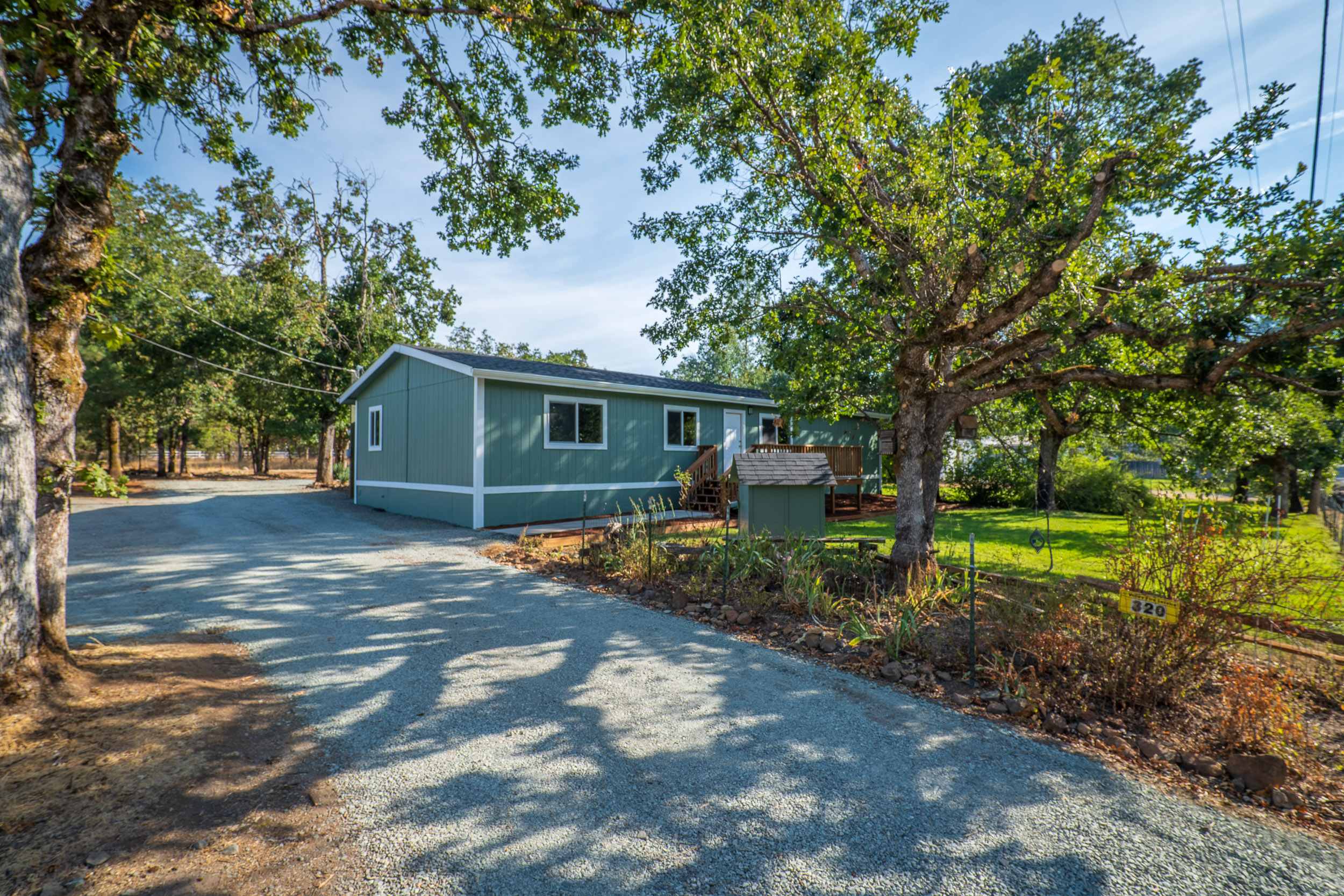
I don't say any of this to knock Zillow. The Zestimate is a genuinely useful conversation-starter, and I check it too. But after years of writing offers and listing homes across Josephine and Jackson County, I can tell you the gap between the number and reality tends to be widest on exactly the kind of property that's most common around here.
What can't an algorithm see about a Southern Oregon home?
An automated model is only as good as the data it can find in a database. Here's what routinely falls through the cracks in the Rogue Valley.
Acreage and how it's actually used. A model can see that a parcel is five acres. It can't see that two of those acres are a steep, unusable slope, or that the flat, cleared, fenced portion is prime for a shop and a garden. Land value in Southern Oregon is enormously sensitive to usability, and that nuance simply isn't in the data.
River and creek frontage. Frontage on the Rogue, the Applegate, or a live creek can move a value substantially — but “waterfront” isn't a clean database field, and the algorithm can't tell a seasonal creek in a culvert from a year-round river with a swimming hole. It also can't weigh floodplain exposure the way a buyer and their lender will.
Well, septic, and system condition. Out here, a huge share of homes run on a private well and septic. A model has no idea whether the well produces plenty or barely keeps up, whether the septic was recently serviced, or whether the roof is two years old or twenty-two. Condition is one of the biggest swing factors in a real sale, and it's close to invisible to software.
Updates the county never recorded. If you remodeled the kitchen, added a heat pump, or finished a bonus room without pulling a permit that changed the tax record, the model doesn't know it happened. It's valuing a version of your home that may be a decade out of date.
Why comparable sales are the real problem in Grants Pass
Automated models work best where homes are nearly identical and sales are frequent — think a tract subdivision in a big metro, where fifty near-twins sold last quarter. Grants Pass is close to the opposite of that.
A 1970s ranch on an acre off Williams Highway, a downtown craftsman, a manufactured home on ten rural acres, and a newer build in a hillside development are not interchangeable, and there may be very few genuinely comparable sales for any one of them in a given stretch of time.
When the pool of true “comps” is thin, an algorithm has to reach — pulling in sales that aren't really alike, or leaning harder on stale data — and the estimate drifts. This is the single biggest reason Zestimate accuracy in Grants Pass tends to lag behind what you'd see in a denser, more uniform market.
What does a real CMA see that a Zestimate can't?
When we prepare a comparative market analysis for a home, we're doing the human work the algorithm can't. We pull the genuinely comparable recent sales, then adjust for the differences that matter — acreage and usability, frontage, condition, updates, outbuildings, and location down to the specific stretch of road.
We look at what's active and pending right now, not just what closed, because that's where the market is heading. And we factor in current market conditions, which shift; what was true last spring may not hold this fall.
Just as important, we actually look at the house. A model can't walk your property, notice the new metal roof, or catch that the “third bedroom” has no closet. That's the difference between an estimate and a price you can list on with confidence.
The practical takeaway
Use your Zestimate the way it's meant to be used — as a free, ballpark orientation, not a listing price and not an appraisal. If you're just curious where things roughly stand, it's fine for that.
But before you make a real decision — listing, refinancing, buying out a sibling, planning a move — get a valuation from someone who has actually seen homes like yours sell in your corner of the county. The number that comes from local eyes on real comparables is the one worth acting on.
If you'd like a straightforward read on what your Grants Pass or Rogue Valley home would likely sell for today, I'm happy to put a CMA together for you — no pressure and no obligation. Sometimes it confirms the Zestimate. Often it tells a very different story.
A no-obligation comparative market analysis for your specific property — real comparable sales, real condition, and what's actually selling in your part of Josephine or Jackson County.
Frequently asked questions
Is the Zestimate the same as an appraisal?
Why is my Grants Pass Zestimate so different from my neighbor's?
Why did my Zestimate drop when nothing changed about my house?
Does a higher Zestimate mean I can list at that price?
How do I find out what my home is really worth?
Sources & verification
- Zillow — published Zestimate accuracy data (nationwide median error, on-market vs. off-market). Zillow updates these figures; check its Zestimate page for the current numbers.
- Josephine County and Jackson County recorded property data — the public records automated models rely on.
This article is general information, not an appraisal or financial advice. Home values and market conditions change; for a valuation specific to your property, consult a local real estate professional or a licensed appraiser.